
Ahmedabad witnessed record monsoon rainfall of nearly 780 mm in 2024, yet a major portion of that water still drained away unused. Experts estimate that if just half of this rain were properly harvested, the city could store and recharge over 10 billion litres of groundwater every year. With rising construction, deeper borewells, and recurring summer shortages, rainwater harvesting in Ahmedabad has become one of the smartest and most sustainable solutions to tackle the city’s growing water crisis.
What’s driving the change is awareness — both among homeowners and industries. From residential societies in South Bopal, Science City, and Chandkheda to factories in Changodar and Naroda, more people are now setting up roof-based rainwater harvesting systems and recharge wells connected directly to their existing borewells. The aim is clear: capture every drop of rain, filter it, and return it to the ground before it’s lost.
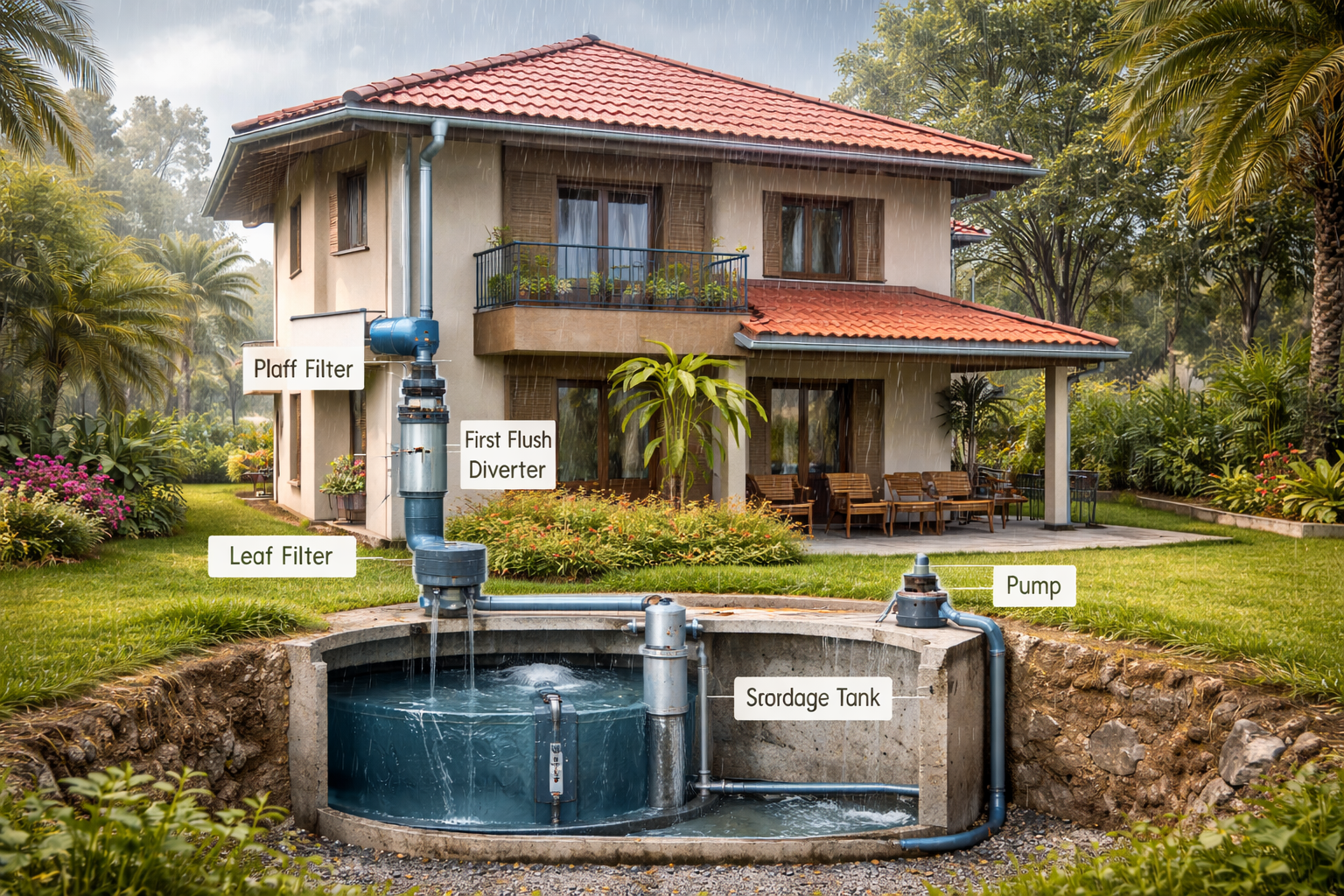
🌿 The Power of Rainwater: How Much Can You Really Save?
To put it into perspective — a 100 m² rooftop in Ahmedabad receives around 75,000 litres of rainwater annually. With an efficient harvesting system (70 % efficiency), that’s over 50,000 litres of usable water per year — enough for gardening, cleaning, and partial household use for 6 months. Multiply that by hundreds of homes, and the city could recharge crores of litres back into the ground instead of watching it flow into storm drains.
✅ Key Benefits of Rainwater Harvesting
-
Recharge Depleting Groundwater: Keeps borewells alive even during peak summer months.
-
Reduce Water Bills: Lowers dependency on municipal or tanker supply.
-
Control Urban Flooding: Reduces runoff load during heavy monsoon rains.
-
Eco-Friendly & Long-Lasting: Requires minimal maintenance and lasts 15 + years.
-
Supports Sustainable Urban Growth: Aligns with Smart City and green-building goals.
💧 Latest Trends in Rainwater Harvesting Across Ahmedabad
- Linking Harvesting Systems to Borewell Recharge
Instead of traditional tanks, new projects integrate percolation wells that directly channel filtered rainwater into the aquifer, boosting groundwater yield. - AMC’s Mandatory Rainwater Policy
The Ahmedabad Municipal Corporation (AMC) now requires all new buildings on plots above 80 m² to include a rainwater harvesting setup — and is even offering rebates for compliant projects. - Smart Filtration Units & IoT Monitoring
New-age systems use multi-layer sand, charcoal, and UV filters along with digital sensors that monitor inflow, recharge rate, and tank levels in real time. - Community-Level Recharge Projects
Several housing societies and schools are building shared recharge wells — a cost-effective approach that benefits entire localities.
Frequently Asked Questions (FAQs)❓
How much rainfall does Ahmedabad get annually?
The city averages 700 – 800 mm of rainfall each year, most of it between June and September.
How much water can I harvest from my roof?
A 100 m² roof can collect about 75,000 litres annually, depending on design and efficiency.
What is the cost of installing a rainwater harvesting system in Ahmedabad?
Basic setups start around ₹15,000 – ₹30,000 for small homes; larger or integrated systems may cost ₹50,000 + depending on pit size and filtration units.
Can I connect my rainwater system to my existing borewell?
Yes — modern designs easily link the filtration unit outlet to a borewell recharge pipe, improving its yield and sustainability.
Is rainwater safe for household use?
After filtration, it’s safe for non-drinking applications like cleaning, flushing, or gardening — and can even be treated for potable use.
Why is rainwater harvesting trending now in Ahmedabad?
Because it’s a practical, low-cost, and long-term solution to the city’s growing water stress, helping residents secure water independence while supporting environmental balance.