
It is inspiring to see a focus on sustainability. As you noted, Rainwater Harvesting is a vital solution for our growing global needs. By capturing what falls freely from the sky, we reduce the strain on our shared infrastructure and natural ecosystems.
To help you understand how this ancient practice works in a modern setting, here is a breakdown of the process and its benefits.
Water is the most valuable resource on our planet. We use it every single day for drinking, cooking, washing clothes, and growing food. However, many places around the world are facing a big problem: there is not enough water to go around. As cities grow and populations increase, the demand for water goes up, but the supply stays the same. This is why saving water is more important now than ever before.
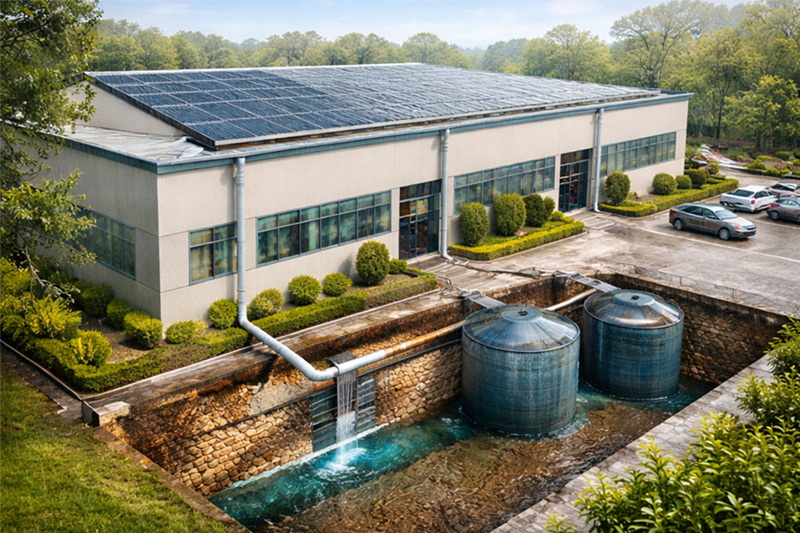
What Is Rainwater Harvesting?
In simple terms, rainwater harvesting is the process of collecting rain falling on a roof or open ground and storing it for later use. Instead of letting the rainwater flow into dirty street drains and disappear, you guide it into a clean tank.
Think of it like a “savings account” for water. When it rains, you make a deposit. When it is dry and hot, you make a withdrawal to use that water.
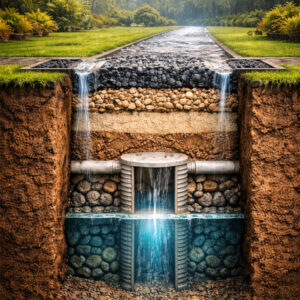
How Does It Work?
The system is very easy to understand. It has four main steps
Top Benefits of Rainwater Harvesting
Collecting rainwater changes the way you use resources. It helps you save money and protects you from water problems. Here are the most important benefits.
Benefits for Homes
For homeowners, installing a rainwater system is one of the best home improvements you can make.
- Healthier Plants and Gardens: Tap water often contains chemicals like chlorine to kill bacteria. While this is safe for humans, plants prefer natural water. Rainwater is pure and free from these chemicals. It also balances the pH level of the soil, helping your garden grow greener and faster.
- Cleaner Clothes and Surfaces: Rainwater is naturally “soft.” This means it does not have the hard minerals found in groundwater. When you wash clothes with soft water, you need less detergent, and your clothes feel softer. It also stops white, chalky stains from forming on your bathroom tiles and taps.
- Prevents Flooding: During heavy storms, water rushes off roofs and driveways, creating puddles and mud. By catching this water, you keep your property drier and cleaner.
- Simple Maintenance: Home systems are not complicated. You only need to clean the roof and the filter once in a while. It does not require expensive repairs.

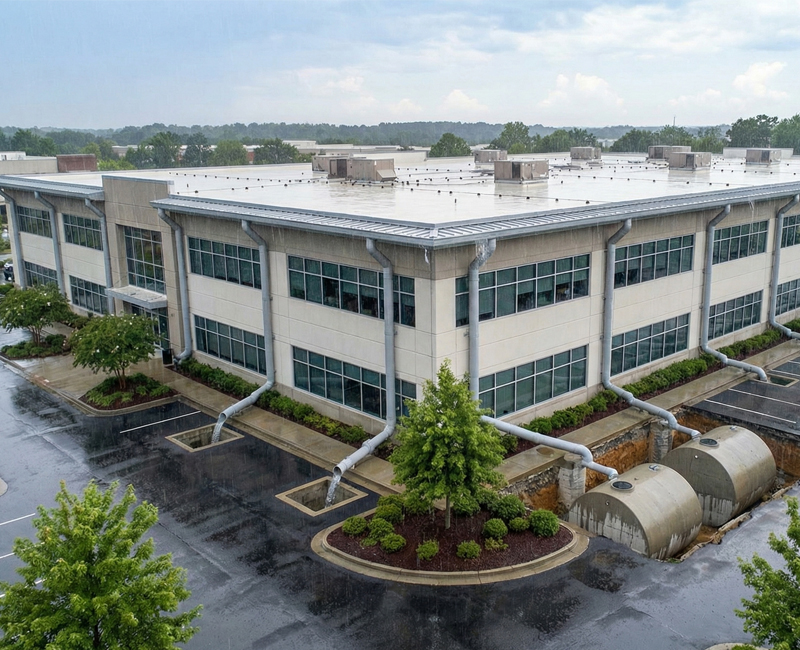
Benefits for Businesses & Commercial Buildings
For offices, factories, schools, and malls, the benefits of rainwater harvesting are even bigger because they use much more water.
- Huge Cost Reductions: Businesses use thousands of liters of water for cooling towers, cleaning floors, and flushing toilets for hundreds of employees. Replacing this with rainwater saves the company a significant amount of money every month.
- Water Security for Operations: Some factories cannot run without water. If the city supply stops, the factory has to stop working, which loses money. A large rainwater tank ensures the business keeps running even during water cuts.
- Corporate Responsibility: Customers today like businesses that care about the environment. A company that harvests rainwater can proudly say they are “Green” and eco-friendly. This improves the company’s image.
- Meeting Government Rules: In many cities, the government requires new commercial buildings to have rainwater harvesting. Installing it ensures the business follows the law and avoids fines.
Comparison Table: Homes vs. Businesses
It is helpful to see how the benefits differ between a small house and a large building.
| Feature | Homes (Residential) | Businesses (Commercial) |
| Primary Goal | Self-sufficiency and gardening | Reducing operating costs |
| Main Uses | Watering plants, washing cars, laundry | Cooling systems, heavy cleaning, toilets |
| System Complexity | Simple filters and small tanks | Advanced pumps and huge underground tanks |
| Financial Impact | Lowers monthly household bills | Saves thousands in operational costs yearly |
| Space Required | Minimal (rooftop or small tank) | Large area for underground storage |
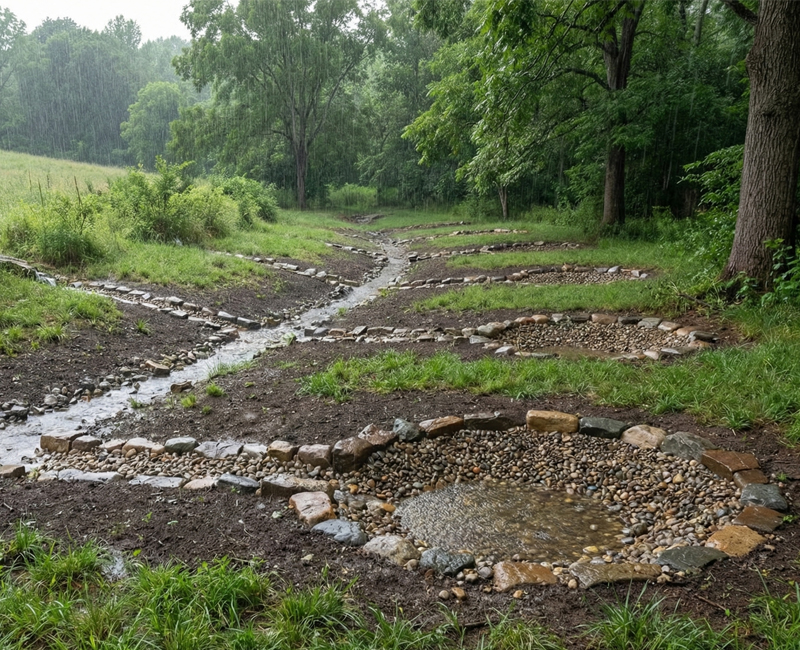
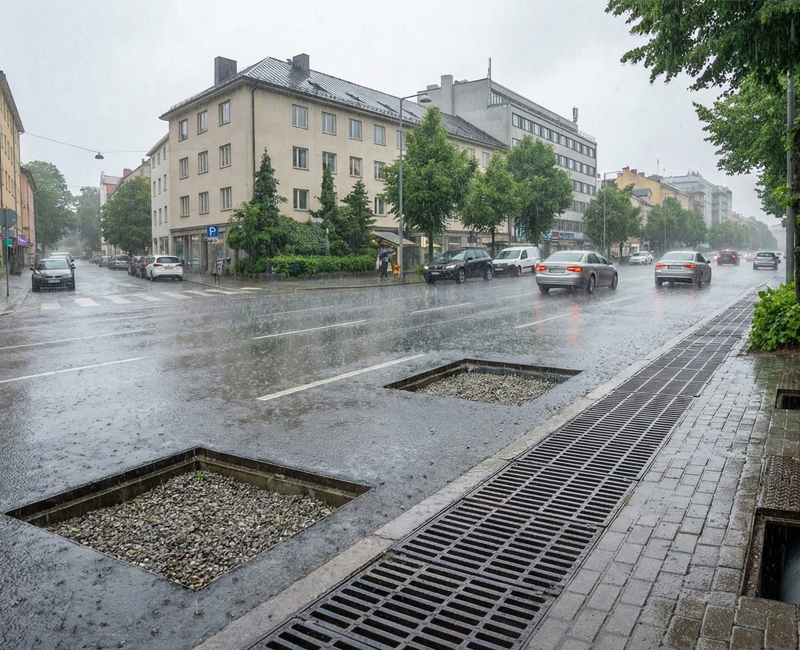
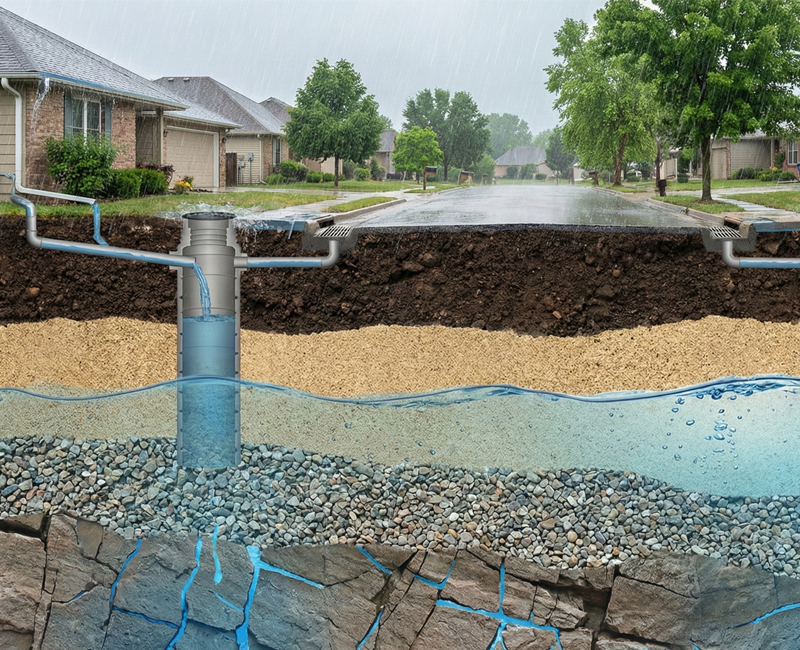
Environmental Benefits of Rainwater Harvesting
Rainwater harvesting is not just about people; it is about healing the planet.
Long-Term Advantages
Is rainwater harvesting worth the cost? Yes, especially when you look at the long term.
Rainwater harvesting is a simple technology with powerful results. It is a bridge between the water we have and the water we need. For homeowners, it means green gardens and lower bills. For businesses, it means efficiency and savings. And for the environment, it means a healthier, more balanced ecosystem.
Nature provides us with fresh water for free every time it rains. Instead of letting it wash away into the drains, we should capture it. By installing a rainwater harvesting system, you are taking a smart step toward a secure and sustainable future.
If you are planning to install a reliable rainwater harvesting system for your home or business, Quality Borewell is here to help. With years of experience and expert guidance, we provide complete rainwater harvesting solutions tailored to your needs. Contact Quality Borewell today to get the right solution for effective water conservation.
FAQs – RainWater Harvesting
You should not drink it directly from the tank. The roof might have dust or bird droppings. However, if you pass the water through a high-quality filter or boil it, it can be made safe for drinking.
Not much. For a small home, a slim tank can fit against a wall. If you don’t have space above ground, you can bury the tank underground so it is hidden.
Yes, flat roofs are excellent for harvesting. You just need to keep the roof surface clean and ensure the water drains toward the pipes.
Mosquitoes only breed in open, still water. A good rainwater system is “closed.” The tank should have a tight lid, and the inlet pipes should have mesh screens to stop insects from entering.
No. Maintenance is very cheap. You mostly need to remove leaves from the gutters and wash the filter periodically. The system runs on gravity or simple pumps, so it rarely breaks down.
Yes! Because rainwater is soft, it is actually better for your washing machine. It prevents scale buildup on the heating element, making your machine last longer.
Every system has an “overflow” pipe. When the tank gets full, the extra water flows out automatically. You can direct this overflow into a garden or a recharge pit so it isn’t wasted.