
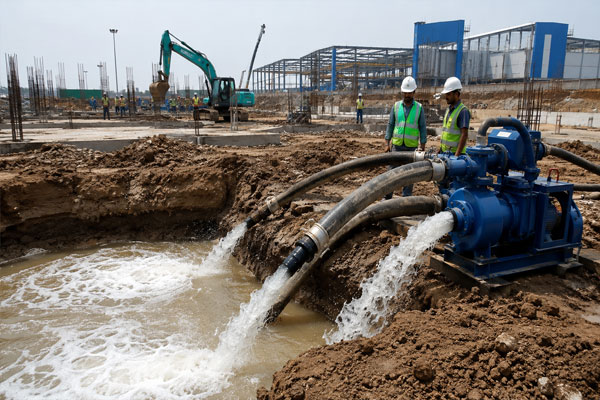
Dewatering Services in Ahmedabad
Water accumulation at construction sites, basements, foundations and excavation areas can delay work and create unsafe working conditions. Excess groundwater may weaken the soil, damage equipment and make it difficult to complete foundation, pipeline or civil engineering work.
A professional Dewatering Service Provider in Ahmedabad helps remove unwanted water and control groundwater levels before and during construction. Quality Borewell provides site-specific dewatering solutions for residential, commercial, industrial and infrastructure projects across Ahmedabad.
What Are Dewatering Services?
Dewatering is the process of removing accumulated surface water or groundwater from an excavation, foundation, basement, trench, pit or construction area. Pumps, pipelines, borewells, sumps and drainage arrangements are used to keep the working area dry.
Dewatering may be required before excavation begins or during the construction process. The selected method depends on:
- Excavation depth
- Groundwater level
- Soil condition
- Quantity of accumulated water
- Site size and accessibility
- Construction duration
- Nearby buildings and underground structures
- Water discharge requirements
A site inspection helps determine the correct pumping method, equipment capacity and discharge location.
Why Is Dewatering Important for Construction Projects?
Construction work below ground level becomes difficult when water continuously enters the excavation area. Without proper groundwater control, soil may become soft and unstable.
Professional dewatering services help maintain a safer and more manageable working environment.
The main benefits include:
- Keeping excavation areas dry
- Improving soil stability
- Supporting safe foundation work
- Reducing construction delays
- Protecting machinery and equipment
- Preventing waterlogging
- Improving access for workers
- Supporting concrete and waterproofing work
- Controlling groundwater around trenches
- Reducing the risk of excavation collapse
Dewatering should be planned before deep excavation, especially in areas where groundwater levels are high.
Dewatering Methods Used for Different Sites
Sump Pump Dewatering
In this method, water is directed towards a collection pit known as a sump. A submersible pump removes the collected water through a discharge pipe.
Sump pumping is commonly used for:
- Shallow excavations
- Small foundation pits
- Rainwater removal
- Construction-site waterlogging
- Lift pits and underground tanks
Wellpoint Dewatering
A wellpoint system includes several small wells installed around the excavation area. These wells are connected to a common pipe and pumping unit.
This method may be used for:
- Wide excavation areas
- Pipeline trenches
- Basement projects
- Sites with sandy soil
- Moderate groundwater lowering
Borewell Dewatering
Borewells are drilled around the excavation, and submersible pumps are installed inside them. Continuous pumping lowers the surrounding groundwater level.
Borewell dewatering may be suitable for:
- Deep excavations
- Large basement projects
- Industrial foundations
- High groundwater conditions
- Long-duration construction work
Deep-Well Dewatering
Deep wells with high-capacity submersible pumps are used when groundwater must be lowered to a greater depth.
This method is generally considered for major construction and infrastructure projects.
Dewatering for Basement Construction
Basement construction usually requires deep excavation below ground level. When the excavation goes below the groundwater table, water may continuously enter from the sides and bottom.
Basement dewatering helps maintain a controlled working area for:
- Excavation work
- PCC and raft foundation
- Reinforcement placement
- Shuttering work
- Concrete casting
- Waterproofing installation
- Retaining-wall construction
- Underground parking development
Pumping may need to continue until the basement structure has enough strength to resist groundwater pressure.
Stopping the dewatering system too early may allow water to rise again and affect unfinished work. The site engineer and dewatering contractor should coordinate before reducing or stopping pumping.
Dewatering for Foundations and Trenches
Foundation pits and trenches are highly affected by water accumulation because they are often narrow and below ground level.
Foundation Dewatering
Foundation dewatering removes water from footings, pile caps, raft foundations and machine foundations. It helps prepare a stable base for reinforcement and concrete work.
Trench Dewatering
Trenches are commonly created for:
- Water pipelines
- Drainage systems
- Sewer lines
- Electrical cables
- Gas pipelines
- Underground utilities
Water inside a trench can affect pipe alignment, jointing, bedding and backfilling. Temporary sumps, drainage pumps or wellpoint systems may be used to keep the trench dry.
Proper discharge planning is important so that removed water does not return to the same excavation.
Why Choose Quality Borewell?
Quality Borewell provides dewatering support for construction, commercial and industrial projects. The team studies the site condition before recommending a suitable pump and water-removal method.
Services may include:
- Site inspection
- Groundwater-level assessment
- Construction dewatering planning
- Excavation water removal
- Basement dewatering
- Foundation dewatering
- Trench dewatering
- Borewell dewatering
- Submersible pump installation
- Discharge-pipeline setup
- Pump maintenance and replacement
- Temporary dewatering arrangements
Quality Borewell serves projects in Ahmedabad, Gandhinagar and nearby industrial and developing areas. The dewatering arrangement is planned according to the excavation depth, water inflow, project duration and site access.
For a suitable dewatering solution, contact Quality Borewell for a site inspection and service estimate.
Frequently Asked Questions
Construction dewatering is the process of removing groundwater, rainwater or accumulated water from excavation areas, foundations, basements and trenches.
Dewatering should preferably begin before excavation reaches the groundwater level. Early planning helps prevent flooding and soil instability.
The suitable pump depends on water quantity, excavation depth, discharge height and the presence of mud or debris. Submersible and drainage pumps are commonly used.
Yes, dewatering may be required when groundwater or rainwater enters the basement excavation and affects foundation or structural work.
Dewatering can help improve soil stability by controlling groundwater, but proper excavation support and engineering safety measures are also required.
Borewell dewatering uses drilled wells and submersible pumps to lower the groundwater level around a construction area.
The duration depends on the groundwater condition and construction schedule. It may operate for a few days, several weeks or until the underground structure is completed.
Yes, suitable dewatering pumps can remove rainwater from open plots, excavations, basements and foundation pits.
Water may rise again and flood the excavation. Important projects should have regular monitoring and backup pumping arrangements.
Quality Borewell provides dewatering support for basements, foundations, excavations, trenches and industrial construction projects in Ahmedabad and nearby areas.