
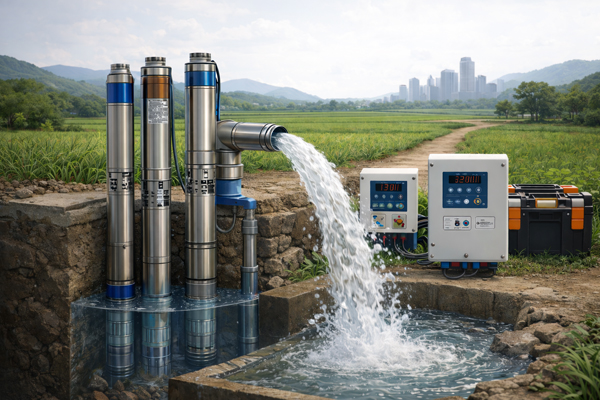
Finding reliable Borewell Submersible Pump Dealers is the first step toward securing a steady water supply for your home or farm. Water is essential for life, but in many parts of India, it is hidden deep underground. To bring that water up to your tank, you need more than just a motor; you need a high-quality submersible pump and a dealer who knows how to help you choose the right one.
In this guide, we will explore everything you need to know about these pumps, from how they work to finding the best deals in your area.
What is a Borewell Submersible Pump?
Unlike a regular pump that sits on the ground, a submersible pump is designed to be pushed deep inside the borewell, completely underwater. It is “hermetically sealed,” which is a fancy way of saying it is 100% waterproof.
How It Works
When you turn on the power, an electric motor inside the pump spins an “impeller.” This spinning action pushes the water upward through a pipe. Because it pushes water rather than pulling it (like a suction pump), it is much more efficient and can reach water hundreds of feet below the surface.
Why Choosing the Right Dealer Matters
You might think you can just buy any pump online, but a local Borewell Submersible Pump Dealer provides value that a website cannot.
Key Factors to Consider Before You Buy
Before you head to the store, make sure you have the answers to these four questions. Your dealer will ask them!
The Borewell Size
Borewells are usually 4 inches, 5 inches, or 6 inches wide. You must buy a pump that fits comfortably inside. A 4-inch pump (often called a V4) is the most common for homes.
The “Head” (Height)
In the world of pumps, “Head” means the total vertical distance the water needs to travel.
Total Head = Depth of the pump + Height of your building.
If your borewell is 200 feet deep and your tank is 50 feet high, you need a pump rated for at least a 250-foot head.
Discharge Rate
This is how much water the pump delivers per minute. If you have a large family or a big farm, you need a higher discharge rate (measured in Liters Per Minute or LPM).
Power Supply
Do you have Single-Phase or Three-Phase power? Most homes use Single-Phase, while large farms and factories use Three-Phase. Buying the wrong one will lead to a motor burnout.
Maintenance Tips to Make Your Pump Last 10+ Years
A good submersible pump is an investment. Here is how to keep it running smoothly:
- Never Run it Dry: The water around the pump actually keeps the motor cool. If you run it when the borewell is empty, the motor will melt.
- Install a Control Panel: A good control panel protects your pump from “overload” or sudden spikes in electricity.
- Check the Foot Valve: Ensure the valve is clear of sand or mud so the pump doesn’t get “clogged.”
- Regular Voltage Checks: If your area has low voltage, avoid running the pump during those times as it puts a heavy strain on the motor.
Finding Dealers in Ahmedabad
If you are looking for Borewell Submersible Pump Dealers in Ahmedabad, you are in luck. Areas like Naroda, Kathwada GIDC, and Ashram Road are famous hubs for machinery. Brands like Unnati Pumps and Latteys are even manufactured right here in Gujarat, offering you great prices and local support.
Conclusion: Don’t Wait for the Dry Season!
Groundwater is a precious resource. By choosing the right Borewell Submersible Pump Dealer, you ensure that you have access to water whenever you need it. Remember to prioritize quality over the cheapest price—a good pump is a silent worker that stays out of sight but keeps your life running.
Choosing the right pump is only half the job; keeping it running for years depends on how well you understand its “personality.” Adding an FAQ section is a great way to help your readers avoid common mistakes and get the best value from their Borewell Submersible Pump Dealers.