
Rainwater Harvesting Services
Water scarcity, falling groundwater levels and increasing dependence on municipal water are becoming major concerns for homes, societies, commercial properties and industries. Rainwater harvesting provides a practical way to collect, filter and reuse rainwater instead of allowing it to flow into drains.
Quality Borewell provides rain water harvesting services designed to conserve water, recharge groundwater and reduce waterlogging around properties. A properly planned system can direct rooftop and surface rainwater into storage tanks, recharge wells or existing borewells.
What Is Rain Water Harvesting?
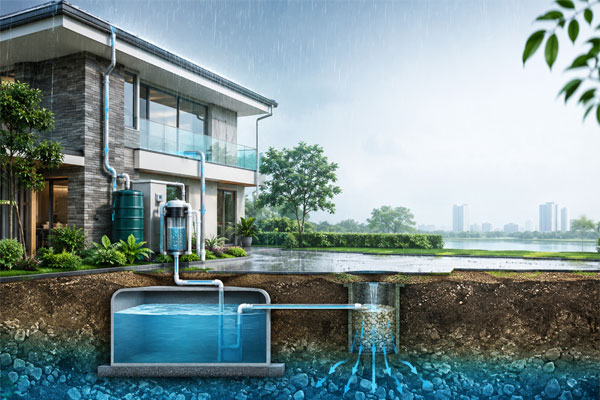
Rain water harvesting is a practical method of collecting, filtering and managing rainwater from rooftops, terraces, open plots and paved surfaces. Instead of allowing rainwater to flow into drains or collect around a property, it is directed through pipes into a filtration system. The filtered water can then be stored for later use or sent underground through a recharge pit, recharge well or existing borewell.
The system is suitable for residential homes, housing societies, schools, hospitals, commercial buildings, warehouses and industrial properties. Its design depends on the available roof area, local rainfall, soil condition, water requirement and available installation space.
Collected rainwater can be used for several non-drinking purposes, including:
- Groundwater recharge
- Gardening and landscaping
- Floor and vehicle cleaning
- Toilet flushing
- Construction activities
- Industrial utility applications
- Reducing dependence on municipal water and tankers
Professional Rain Water Harvesting Services
Every property has a different roof area, soil condition, water requirement and drainage system. Therefore, a rainwater harvesting setup should be designed after inspecting the site.
Quality Borewell offers rain water harvesting services for residential, commercial and industrial properties. The work may include site inspection, system planning, recharge structure construction and connection with existing drainage or borewell systems.
The main goal is to manage rainwater effectively and allow clean water to enter the ground safely.
Types of Rain Water Harvesting Systems
Rooftop Rainwater Harvesting
In this method, rainwater falling on the terrace or rooftop is collected through gutters and pipes. The water passes through a filtration unit before entering a storage tank, recharge pit or recharge well.
Rooftop rainwater harvesting is suitable for:
- Individual houses
- Residential societies
- Schools and colleges
- Hospitals
- Hotels
- Commercial buildings
- Factories and warehouses
Recharge Well System
A recharge well allows filtered rainwater to reach deeper soil layers. It helps improve groundwater recharge and can support nearby borewells over time.
The well generally contains layers of filtering materials such as gravel, pebbles and sand. These materials help remove suspended particles before water moves underground.
Recharge Pit
A recharge pit is a shallow structure filled with filtration materials. It is suitable for properties with limited space and suitable soil conditions.
Recharge pits can help reduce surface runoff and prevent water from collecting near buildings, parking areas and open spaces.
Borewell Recharge
An existing borewell may be used for groundwater recharge after proper inspection and filtration planning. Rainwater should never be directed into a borewell without an appropriate filter chamber because dirt and contaminants can damage the system and affect groundwater quality.
Benefits of Rain Water Harvesting
Improves Groundwater Recharge
Rainwater harvesting allows water to enter the ground naturally. This can support groundwater levels and reduce the rapid decline of underground water resources.
Reduces Waterlogging
Heavy rainfall can cause water to collect around homes, factories, parking areas and roads. A properly designed harvesting system directs excess water into recharge structures and helps reduce waterlogging.
Lowers Dependence on External Water Sources
Stored rainwater can be used for gardening, cleaning and other non-drinking purposes. This reduces dependence on municipal water and water tankers.
Supports Borewell Water Availability
Groundwater recharge can support the surrounding aquifer and may improve the long-term availability of water in nearby borewells. Results depend on rainfall, soil type, local geology and water usage.
Reduces Soil Erosion
Uncontrolled rainwater runoff can remove surface soil and damage landscaping. Proper collection and drainage help control the flow of water.
Provides an Environment-Friendly Water Solution
Rainwater harvesting makes productive use of a natural resource. It supports sustainable water management for homes, societies and industries.
Rain Water Harvesting for Residential Societies
Residential societies have large terrace areas that can collect a significant quantity of rainwater. A common rainwater harvesting system can reduce waterlogging, support landscaping and recharge groundwater.
Before installation, the contractor should inspect:
- Total terrace area
- Number of rainwater outlets
- Existing drainage system
- Available open space
- Underground utility lines
- Existing borewell condition
- Soil absorption capacity
Rain Water Harvesting for Industries
Factories, warehouses and industrial buildings often have large roof areas. These properties can collect considerable rainwater during the monsoon.
Industrial rainwater harvesting systems can be planned for groundwater recharge, gardening, cleaning and other permitted non-potable uses. Proper filtration is especially important where dust, oil or industrial particles may be present.
Maintenance of a Rain Water Harvesting System
Regular maintenance keeps the system functional and prevents blockages. Important maintenance work includes:
- Cleaning rooftops before the monsoon
- Removing leaves and debris from gutters
- Cleaning filtration media
- Checking pipes for cracks and blockages
- Inspecting recharge chambers
- Flushing the first rainfall away
- Preventing wastewater from entering the system
The system should preferably be inspected before every monsoon season.
Why Choose Quality Borewell?
Quality Borewell provides practical groundwater solutions for different properties and applications in Ahmedabad.
Our key strengths include:
- Team with 50 years of experience
- Professional drilling equipment
- Residential and industrial project capability
- Deep drilling support
- Suitable casing and pipe guidance
- Pump installation assistance
- Bore cleaning and repair services
- Clear project assessment
- Reliable after-service support
- Solutions based on actual site requirements
Choose Quality Borewell for Rain Water Harvesting Services
Quality Borewell provides practical rain water harvesting solutions for homes, societies, commercial buildings and industrial properties. The team evaluates the property and recommends an appropriate system according to available space, water flow and groundwater conditions.
A well-planned rainwater harvesting system can conserve water, reduce waterlogging and support groundwater recharge for the future.
Contact Quality Borewell for a site inspection and rain water harvesting service consultation.
Frequently Asked Questions
Its main purpose is to collect rainwater and use it for storage or groundwater recharge instead of allowing it to flow into drains.
Yes, but the borewell and surrounding conditions should first be inspected. A proper filtration chamber must be installed before directing rainwater into it.
Yes. Residential societies usually have large terrace areas and multiple rainwater outlets, making them suitable for rooftop rainwater harvesting.
It should be checked before and during the monsoon. The cleaning frequency depends on the amount of dust, leaves and sediment collected.
A properly designed system can reduce surface runoff and direct excess rainwater into storage or groundwater recharge structures.
Rainwater should not be used for drinking without suitable treatment, testing and purification. It is commonly used for gardening, cleaning and other non-potable purposes.
The space requirement depends on roof area, rainfall, soil type and expected water flow. A site inspection is necessary to determine the correct size.
A recharge pit is generally shallow, while a recharge well carries water deeper underground. The suitable structure depends on site and soil conditions.