
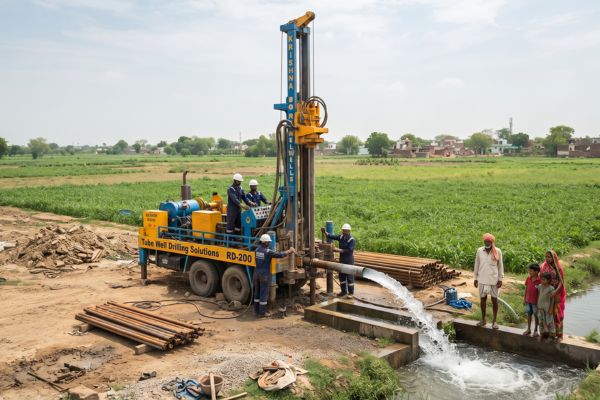
Tube Well Contractor for Reliable Water Drilling Solutions
A dependable water source is important for residential properties, farms, industries, commercial buildings, construction sites, and institutions. Choosing an experienced Tube Well Contractor can help you plan the drilling process correctly according to ground conditions, required depth, water demand, and site accessibility.
Tube wells are commonly used to access underground water where surface water supply is limited or insufficient. Professional drilling, proper site planning, suitable casing, and correct pump selection are important for creating an efficient water supply system. Quality Borewell provides tube well and borewell solutions for different residential, agricultural, commercial, and industrial requirements.
What Is a Tube Well?
A tube well is a type of groundwater extraction system in which a narrow bore is drilled into the ground to reach a suitable water-bearing layer. Pipes or casing are installed in the drilled bore, and a suitable pump is used to lift groundwater to the surface.
The required depth and construction of a tube well can vary from one location to another. Factors such as local geology, groundwater conditions, bore diameter, water requirement, and property type should be considered before drilling begins.
What Does a Tube Well Contractor Do?
A Tube Well Contractor manages different stages involved in developing a tube well. The work may include site assessment, drilling, casing installation, bore cleaning, pump-related guidance, and other activities based on project requirements.
An experienced contractor should understand the intended application before recommending the drilling approach.
For example, a residential property may have a very different water requirement compared with a factory, farm, housing society, or large commercial building.
Why Choose an Experienced Tube Well Contractor?
Tube well drilling requires specialized equipment and practical knowledge of drilling conditions. Choosing an experienced contractor can help reduce avoidable problems during the project.
A professional contractor considers important factors such as:
- Site accessibility
- Expected drilling depth
- Bore diameter
- Ground formation
- Casing requirements
- Water requirements
- Suitable drilling method
- Pump requirements
- Safety during drilling
Proper planning can also help property owners understand the expected scope of work before drilling starts.
Tube Well Drilling Process
The exact tube well drilling process depends on the site’s ground conditions and project requirements.
The process generally starts with site inspection and planning. Suitable drilling machinery is then positioned at the selected location. Drilling continues to the required depth based on the ground formation and project conditions.
After drilling, appropriate casing may be installed where required. The bore may then be cleaned and prepared for further development and pump installation.
Site Inspection and Planning
The contractor inspects the site to check drilling space, machine access, nearby structures, utilities, and safety conditions before starting the work.
Selecting the Drilling Location
A suitable drilling point is selected based on available space, site conditions, and future access for pump installation and maintenance.
Setting Up the Drilling Machine
The drilling rig and supporting equipment are positioned properly according to the required bore depth, diameter, and ground conditions.
Starting the Drilling Work
Drilling begins vertically through soil, sand, clay, gravel, or rock using suitable equipment according to the ground formation.
Drilling to the Required Depth
Drilling continues until the required depth or suitable water-bearing layer is reached based on actual site and groundwater conditions.
Tube Well Contractor in Ahmedabad
Finding a professional Tube Well Contractor in Ahmedabad is important for residential, agricultural, commercial, and industrial projects requiring groundwater access.
Ahmedabad and its surrounding areas include different types of developments, from homes and housing societies to factories, warehouses and commercial facilities. Each project can have different drilling and water requirements.
Quality Borewell provides tube well and borewell drilling solutions based on site conditions and customer requirements. Proper evaluation before drilling helps determine the equipment, bore size, casing requirements, and other project considerations.
Borewell Drilling Services in Ahmedabad
Tube well and borewell drilling services in Ahmedabad are required for various applications where groundwater is used as a primary or supplementary water source.
Professional borewell services may be suitable for:
- Residential properties
- Housing societies
- Agricultural land
- Factories
- Warehouses
- Commercial buildings
- Schools and institutions
- Construction projects
- Industrial facilities
The drilling requirement should be evaluated individually because water demand and underground conditions differ between locations.
Tube Well Drilling for Residential Properties
Homes, apartments, and residential societies may require groundwater for general water supply, gardening, cleaning, or other suitable uses.
Before starting residential tube well drilling, the contractor should consider available drilling space, access for machinery, expected depth, surrounding structures, and water requirements.
Proper planning is especially important in developed residential areas where space for drilling equipment may be limited.
Tube Well Drilling for Agriculture
Agriculture can require a substantial and dependable water supply. A tube well may be used to support irrigation where groundwater conditions are suitable.
An agricultural tube well contractor should consider factors such as irrigation requirements, farm size, expected water demand, drilling depth, and pump capacity.
After drilling, selecting an appropriate submersible pump is equally important. An incorrectly selected pump may provide insufficient discharge or consume more electricity than necessary.
Industrial Tube Well Drilling
Factories and industrial facilities may require groundwater for utility requirements, process applications, cleaning, cooling, landscaping, or other permitted uses.
Industrial borewell drilling projects may require deeper drilling, larger water requirements, or different site planning compared with residential projects.
The contractor should understand the expected water demand and operating requirements before recommending the drilling and pumping arrangement.
How to Choose a Tube Well Contractor
Before selecting a contractor, customers should evaluate experience, equipment, technical knowledge, service capabilities, and understanding of local drilling conditions.
Ask the contractor about the proposed drilling process, casing requirements, equipment access, approximate scope of work, and charges.
Avoid selecting a contractor based only on the lowest quotation. Drilling quality and proper planning can have a significant impact on the long-term usability of the bore.
Tube Well and Submersible Pump Selection
Drilling a tube well is only one part of developing a reliable water system. Selecting the correct submersible pump is also important.
Pump selection generally depends on bore depth, water level, required discharge, delivery height, pipe size, power supply, and daily operating requirements.
A properly matched pump can provide efficient water delivery while avoiding unnecessary power consumption.
Why Choose Quality Borewell?
Quality Borewell provides solutions for tube well drilling, borewell requirements, submersible pumping, and related groundwater applications.
The focus is on understanding the customer’s requirement before recommending an appropriate solution. Whether the project is for a residential property, agricultural land, commercial building, or industrial facility, proper planning helps achieve a more practical drilling solution.
Customers looking for a Tube Well Contractor in Ahmedabad can discuss their site conditions, intended application, and water requirements before starting the project.
Conclusion
Choosing the right Tube Well Contractor is an important step when planning a groundwater source for residential, agricultural, commercial, or industrial applications.
A professional contractor can help with site planning, drilling, casing requirements, bore development, and guidance for suitable pump selection. Factors such as ground conditions, bore depth, water demand, site access, and intended use should always be considered before work begins.
Quality Borewell provides tube well and borewell solutions in Ahmedabad for customers looking for professional assistance with their groundwater requirements.
Frequently Asked Questions
A tube well contractor handles drilling and related work required to develop a groundwater source, including planning, drilling, casing, bore development, and other services depending on the project.
Tube well depth depends on local geology, groundwater conditions, water-bearing formations, and site requirements. The same depth cannot be recommended for every property.
Both are used to access groundwater. The terminology and construction method can vary according to bore diameter, depth, geological conditions, and local usage.
Tube well drilling cost depends on depth, diameter, ground conditions, casing requirements, drilling method, equipment, and site accessibility.
Choose an experienced contractor who can evaluate your site requirements, explain the drilling process, use suitable equipment, and provide clear information about the expected scope and cost.
Yes, tube wells may be considered for industrial properties where groundwater extraction is suitable and permitted. The system should be planned according to the facility’s water requirement and local conditions.
Pump selection depends on bore depth, water level, total head, required discharge, pipe size, power supply, and operating hours. A submersible pump is commonly used for deeper groundwater applications.
Yes. Tube wells are commonly used for agricultural irrigation where suitable groundwater is available. Pump capacity should be selected according to irrigation requirements and bore conditions.